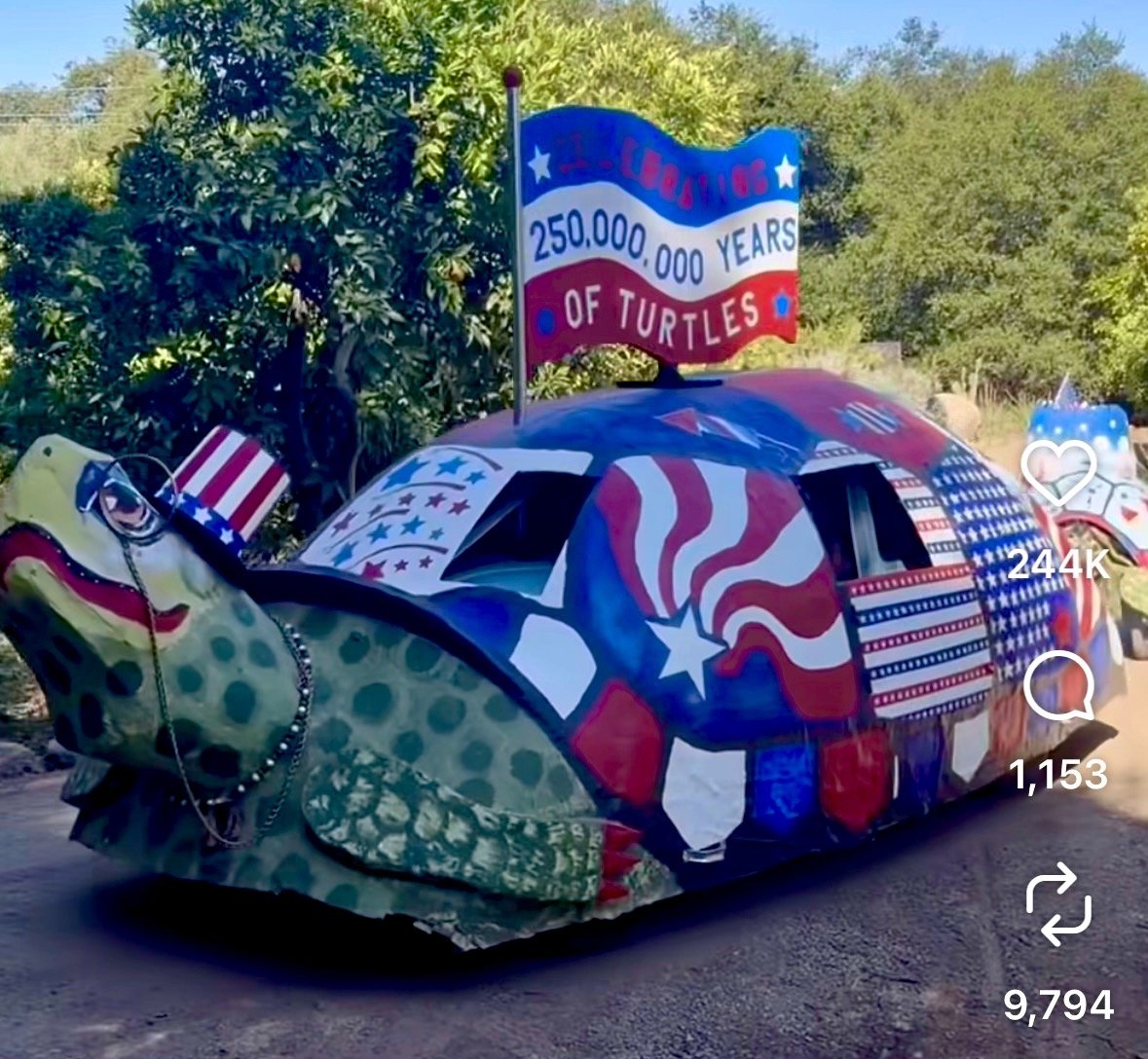
Turtles at 250 Million
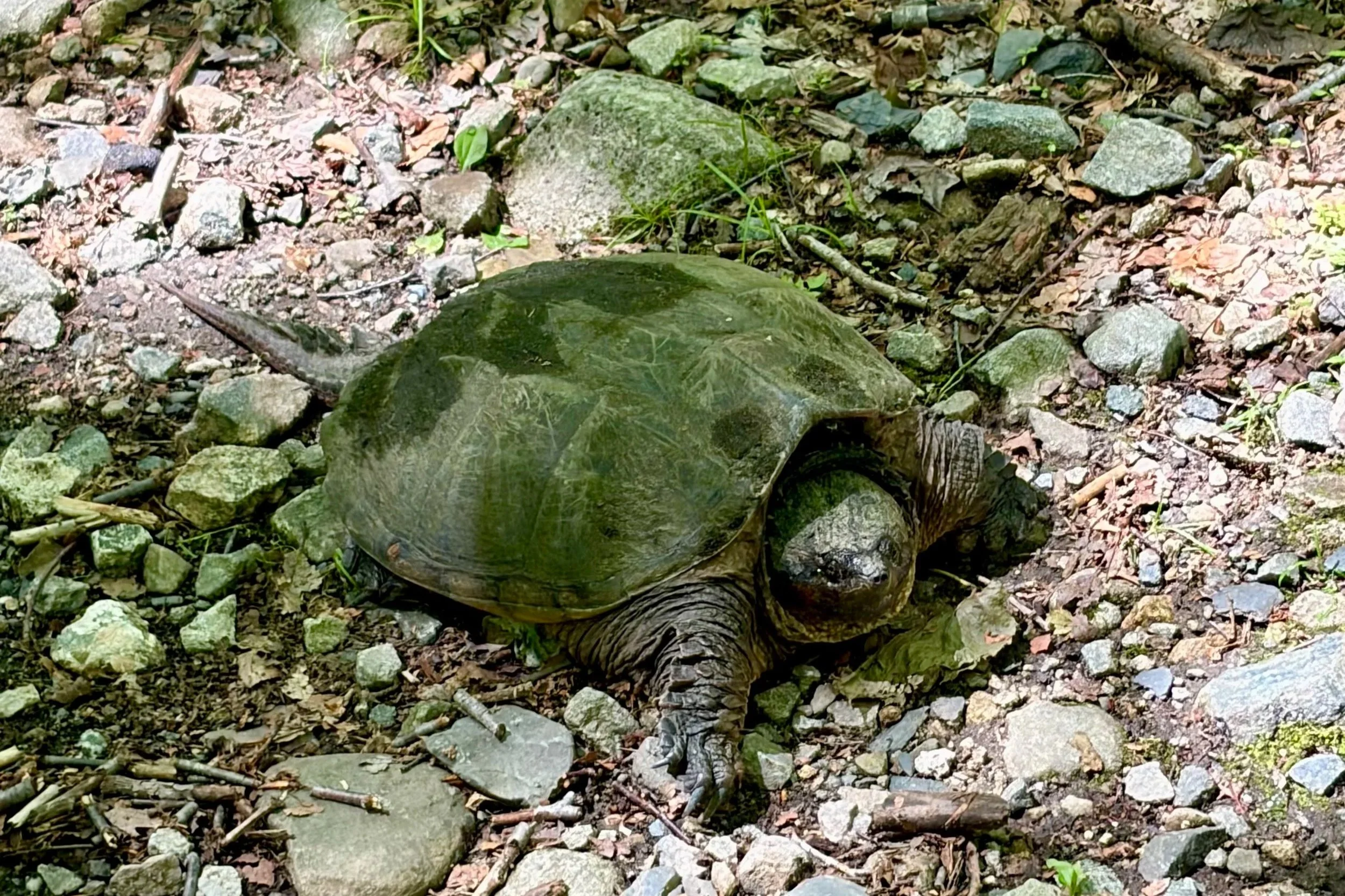
Our well disguised friend whom we stumbled upon amongst the rocks of then Redback Trail in Sterling.
Last weekend, as we observed America’s 250th birthday, I sat at home, rotting on my phone. I came down with a cold on Thursday, and feeling positively wretched from dehydration sickness, I spent most of the last few days sleeping, watching Ken Burns documentaries, reading Wuthering Heights, and eating ice cream. It was in this period of illness that I had the privilege of stumbling upon an Instagram Reel from the environmental organization The Turtle Conservancy. The reel featured a parade based on your typical small-town 4th of July festivities but celebrating the turtle's 250 million years on earth. Needless to say, I found it wholesome and entertaining, yet on further reflection, I also think that it perfectly encapsulates humanity’s transience on this planet. When people around the world celebrate the birth of their young countries, some of our more-than-human neighbors, such as turtles, literally evolved before the dinosaurs. Turtles in particular have a special place in the history of North America. Native creation stories, like those of Haudenosaunee/Iroquois and Anishinaabe nations, posit that the world was created on top of a turtle’s shell. This has led people in certain Indigenous circles to use the term Turtle Island as an alternative to North America and recognize the centrality of the natural world in Native cosmologies.
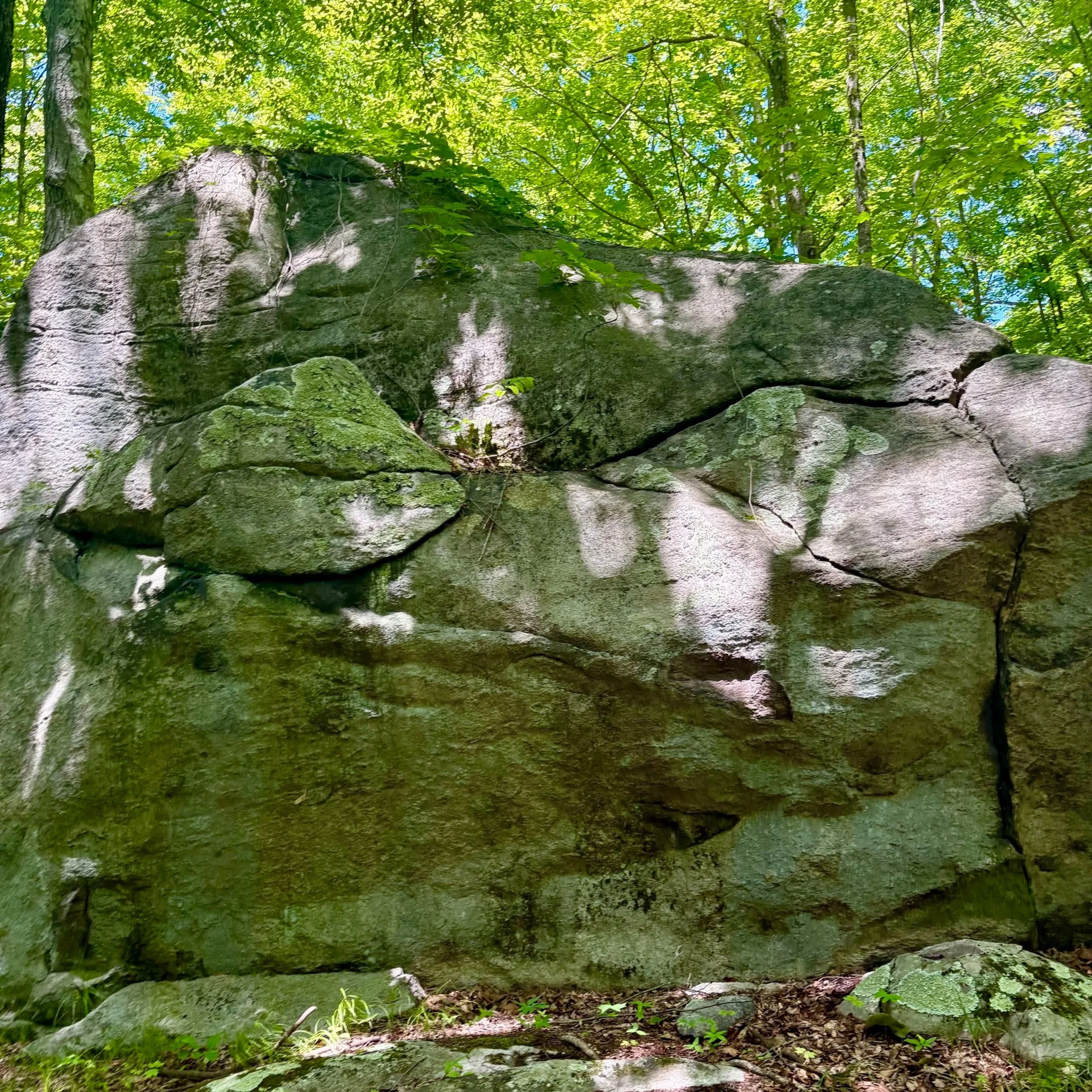
One of the many Glacial Erratics (large boulders) found at Sterling Forest State Park - carried there around 25,000 years ago by the receding glacier.
As you may know from last week’s blog, one of my most recent adventures on Turtle Island took me to Sterling Forest State Park about two weeks ago. On our hike, my brother and I stumbled upon a turtle by Southgate. Noah (my brother) told me that our reptilian friend was a regular in the area, and we stopped to take a picture of it. At the time, like most people, I did not think about the complex and ancient genealogy of this creature. From now on, though, I aim to incorporate this sort of reflection on time as a mindfulness practice when I am outdoors. This conception of time as a force extending far past human experience and existence is referred to as “deep time.” It is an understanding of history that refutes anthropocentric (human-centric) worldviews and recognizes broader “cosmological, geological and evolutionary time scales.” In other words, creation was here long before we evolved into it and will exist long after we go extinct. When you, dear reader, hike, ride, build trails, or participate in any outdoor recreation, I encourage you to contemplate “deep time” so that it may inspire more wonder and amazement on your journey.